Dental Lithium Disilicate Glass Ceramics — Properties, Manufacturing Process, and Clinical Applications
2025-11-19
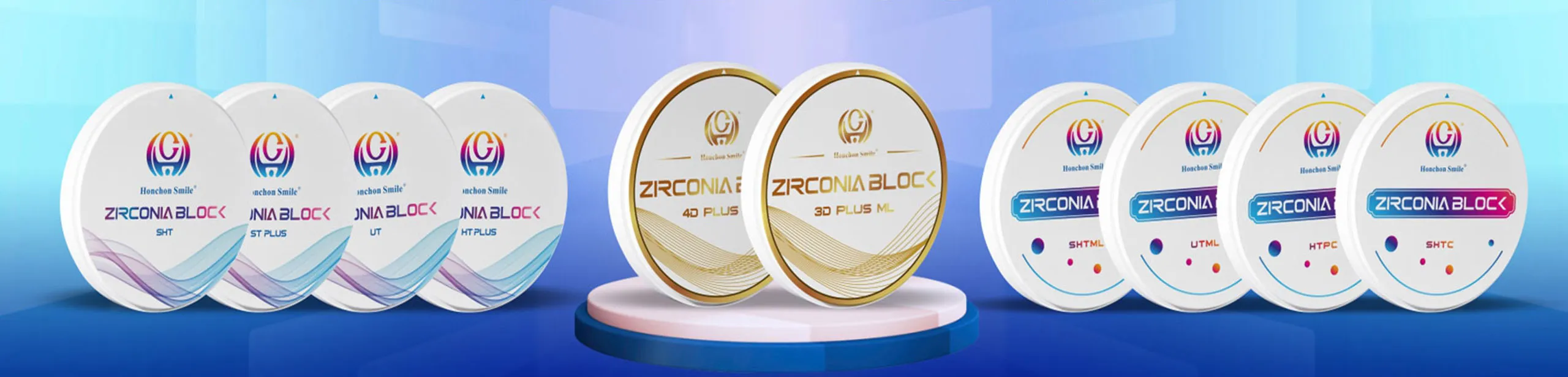
Dental lithium disilicate glass ceramics—often simply called lithium disilicate ceramics—have become one of the most widely used restorative materials in modern dentistry. In China, major manufacturers such as Aidite, Upcera, and HONCHON Smile are actively producing lithium disilicate blocks and ingots for CAD/CAM and pressing systems.
This material is favored for its high strength, excellent translucency, and impressive esthetic performance, making it suitable for a wide range of restorative indications.
Below is a complete, easy-to-understand analysis of its key characteristics, preparation process, and clinical uses.
1. Characteristics of Lithium Disilicate Glass Ceramics
1. High Mechanical Strength
Lithium disilicate ceramics typically feature:
Flexural strength: around 400 MPa
Excellent fracture toughness
High resistance to chewing forces
These properties ensure long-term stability and reliability, even in high-load areas of the oral cavity.
2. Excellent Biocompatibility
As a non-toxic, non-irritating ceramic material, lithium disilicate exhibits outstanding biological safety.
It does not trigger allergic reactions and is highly compatible with oral soft and hard tissues, making it suitable for long-term wear in the mouth.
3. Superior Esthetic Properties
Lithium disilicate stands out for its impressive esthetics:
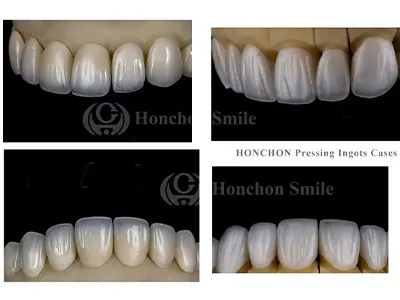
Tooth-like translucency
Natural optical behavior
Wide shade selection
These qualities allow clinicians and dental technicians to achieve restorations that closely mimic natural enamel and dentin, delivering highly esthetic outcomes.
2. Preparation Process of Lithium Disilicate Glass Ceramics
Although the full manufacturing process is complex, the core production workflow can be summarized in three key steps:
1. Batching and Melting
Raw materials—mainly silica, lithium oxide, and other oxides—are mixed in precise ratios and melted at high temperatures to form a uniform glass melt.
This step directly affects the purity and stability of the final ceramic.
2. Molding and Heat Treatment
The molten glass is cast into molds to create the desired shapes (such as blocks or ingots).
Subsequent heat treatment allows controlled crystallization, significantly enhancing:
Flexural strength
Thermal stability
Fracture resistance
This is the critical step that forms the lithium disilicate microstructure.
3. Processing and Polishing
Finally, the shaped ceramics undergo precision milling, fine grinding, and polishing to achieve:
Accurate marginal fit
Smooth surface quality
Optimal translucency
The finished product can then be used in CAD/CAM systems or for traditional hot-pressing workflows.
3. Applications of Lithium Disilicate Ceramics in Dentistry
Lithium disilicate’s mechanical strength, translucency, and biocompatibility make it suitable for a wide range of restorative treatments.
1. Dental Veneers
Lithium disilicate veneers can dramatically improve:
Tooth color
Minor misalignment
Shape irregularities
They are particularly useful for treating:
Yellow or discolored teeth
Tetracycline staining
Enamel defects
The esthetic effect is highly natural, making it a top choice for smile design.
2. Crowns and Bridges
Thanks to its flexural strength and fracture toughness, lithium disilicate is used for:
Full-coverage crowns
Short-span bridges (typically anterior or premolar regions)
Its thermal properties and translucency allow restorations that are both functional and beautifully lifelike.
3. Implant Restorations
Lithium disilicate can also serve as:
Implant crowns
Custom abutments (in some systems)
Its ability to integrate visually with surrounding teeth and tissues enhances the esthetic outcome of implant restorations.
Conclusion
With its excellent mechanical properties, esthetic performance, biocompatibility, and aging resistance, lithium disilicate glass ceramic has become a core material in modern restorative dentistry. As technology continues to advance, the quality and versatility of lithium disilicate will only improve, bringing patients more natural, durable, and functional restoration solutions.