PEEK in Dentistry: High-Performance Polymer for Modern Dental Applications
2025-11-18
Polyetheretherketone (PEEK) is an advanced thermoplastic polymer increasingly used in dental applications as a metal alternative. Its combination of biocompatibility, mechanical strength, and machinability makes it a preferred material for prosthetics, implants, and CAD/CAM-fabricated devices. This article examines PEEK’s material properties, clinical advantages, and practical applications in dentistry.
Material Properties of PEEK Relevant to Dentistry
1. Biocompatibility
PEEK is chemically inert, non-toxic, and non-immunogenic, making it suitable for patients with metal sensitivities. Unlike certain metals, PEEK does not trigger allergic reactions, which can affect approximately 15% of patients. Decades of use in medical implants support its clinical safety profile.
2. Mechanical Strength and Flexibility
Despite being lightweight, PEEK exhibits excellent tensile and flexural strength. Its elastic modulus closely approximates that of cortical bone, providing functional flexibility and reducing stress shielding around dental implants. This property also enhances comfort for patients during mastication.
3. Chemical Stability
PEEK resists corrosion, moisture absorption, and chemical degradation. Its dimensional stability after milling ensures long-term performance and reliability in prosthetic applications.
4. Machinability and CAD/CAM Compatibility
PEEK is fully compatible with modern dental CAD/CAM systems. It can be precisely milled into custom crowns, bridges, partial dentures, and implant abutments while maintaining structural integrity.
5. Radiolucency
PEEK does not interfere with diagnostic imaging (X-ray, CT, or MRI), allowing accurate assessment of surrounding bone and tissues. Its radiolucent nature is an advantage over metal components, which often create imaging artifacts.
6. Aesthetic and Sensory Advantages
PEEK can be color-matched to adjacent teeth, providing natural aesthetics. It is metal-free and taste-neutral, improving patient comfort compared to metallic restorations.
Clinical Applications of PEEK in Dentistry
1. Crowns and Bridges
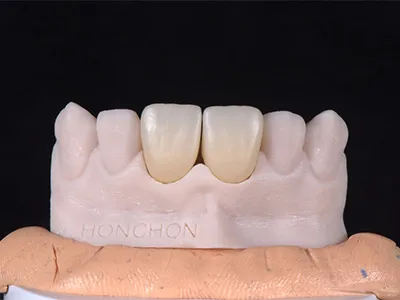
PEEK crowns offer sufficient hardness and wear resistance while remaining lightweight. Bridges fabricated from PEEK reduce stress on supporting teeth and improve long-term comfort.
2. Partial Dentures
The polymer’s modulus similar to bone ensures elastic behavior, reducing pressure points and increasing patient tolerance.
3. Implant Abutments
PEEK’s flexibility and high fatigue resistance reduce the risk of fracture and stress shielding. Its compatibility with soft tissue and non-metallic composition minimizes hypersensitivity reactions.
4. Temporary Restorations
PEEK is ideal for provisional crowns and bridges due to its machinability, accuracy, and biocompatibility.
PEEK Material Specifications for Dental Use
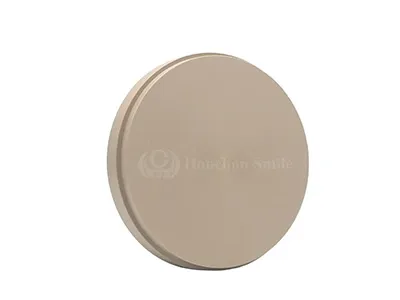
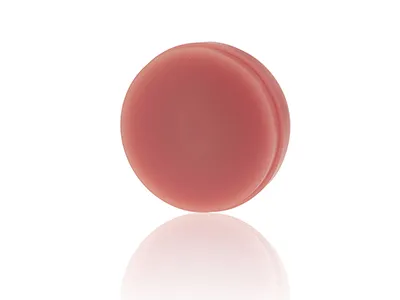
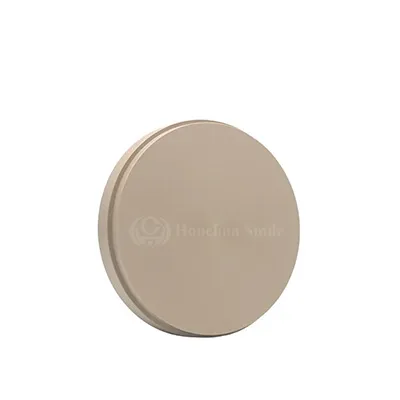
Disc Sizes: 98 mm, 95 mm, 71 mm
Thickness Options: 16 mm, 18 mm, 20 mm, 22 mm, 25 mm
Properties: Lightweight, strong, stable, biocompatible, machinable, metal-free, radiolucent
Conclusion
PEEK represents a high-performance alternative to metals in dentistry, combining structural integrity, biocompatibility, and patient comfort. Its versatility in crowns, bridges, dentures, and implant applications positions it as a forward-looking material for modern dental practice. With continued adoption of digital workflows, PEEK is set to play an increasingly critical role in CAD/CAM-fabricated dental restorations.